
2026.07.07 HTWO
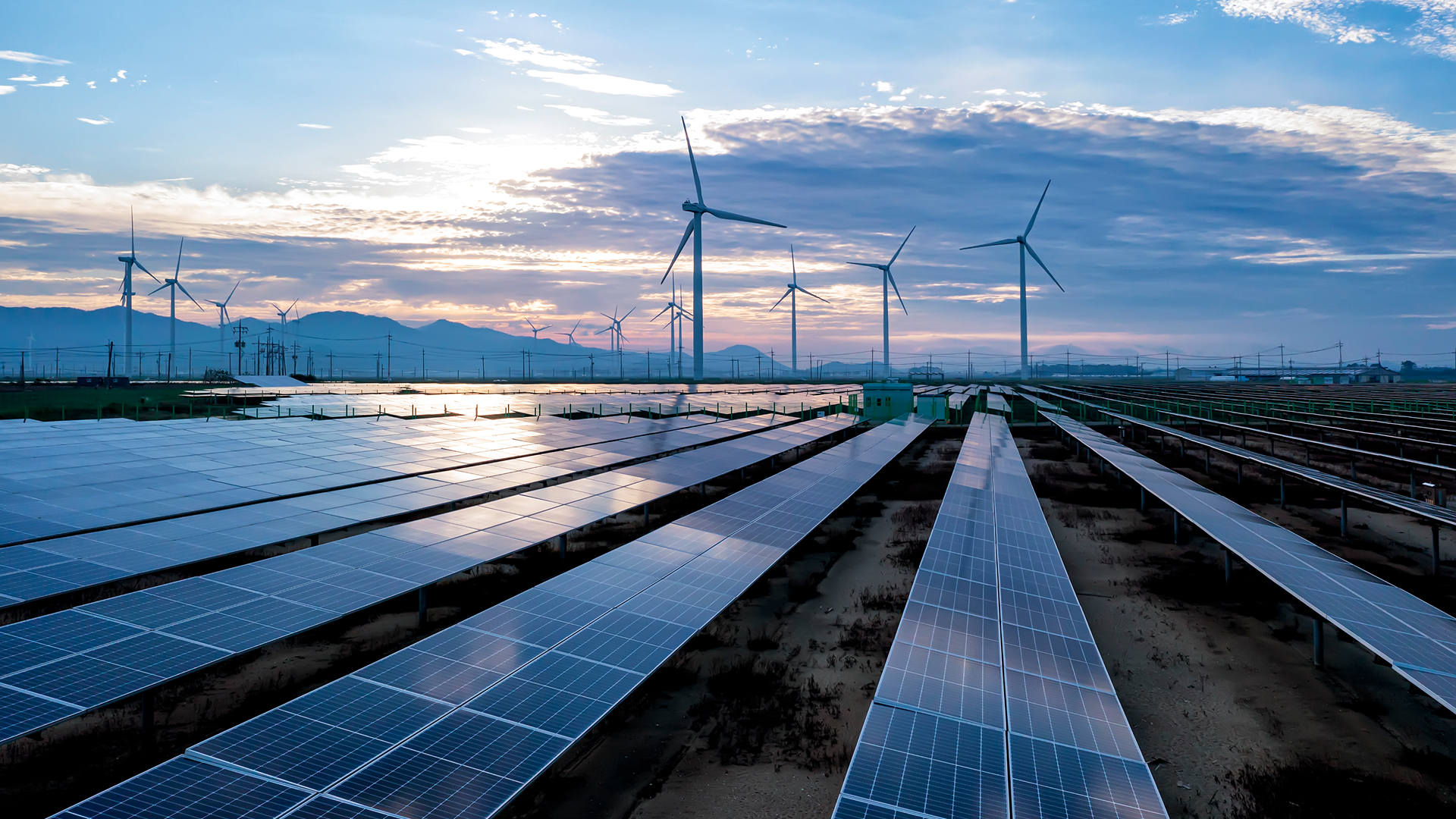
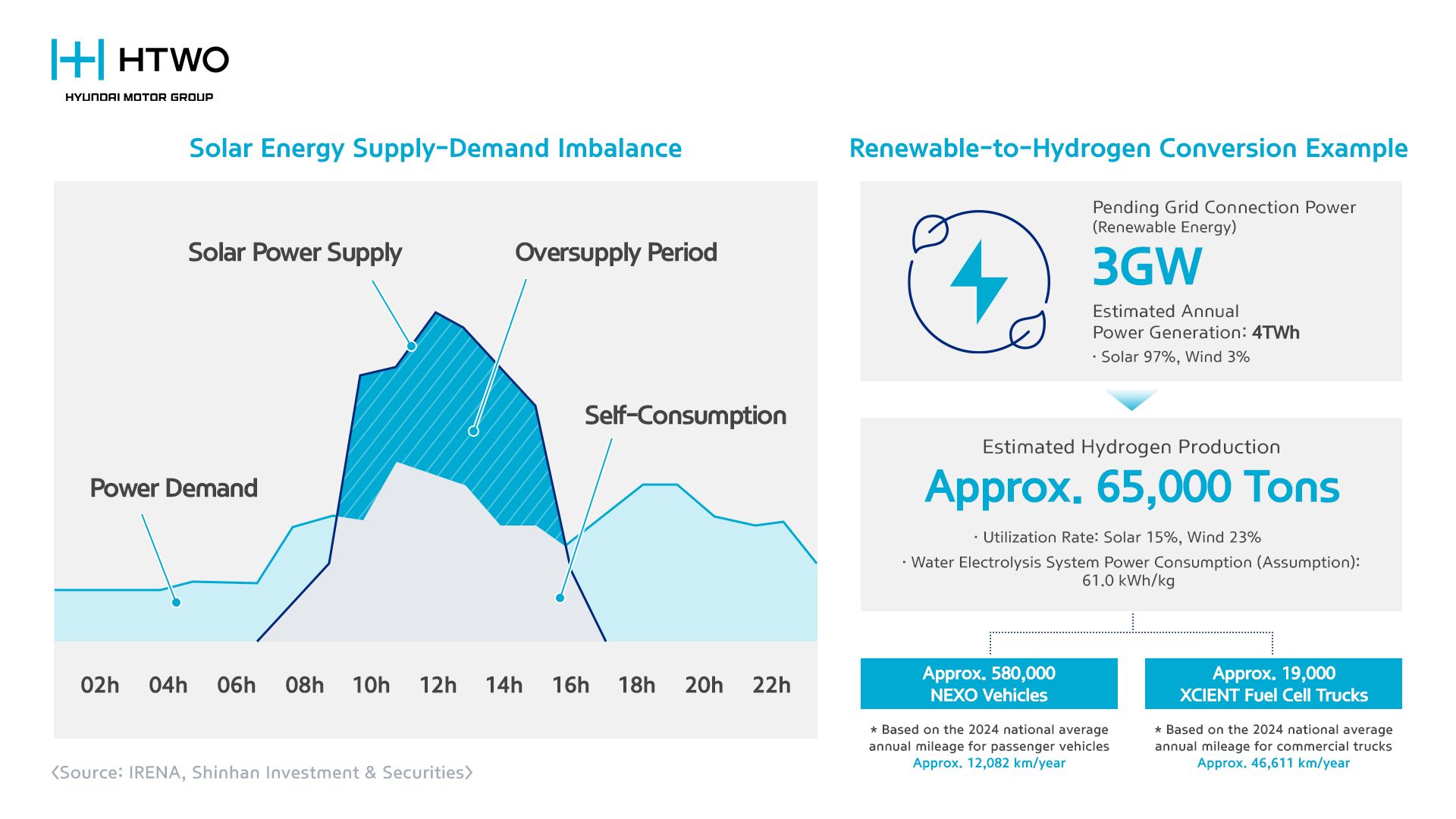
Solar and wind power are key solutions for achieving carbon neutrality, but they have limitations because their power generation is not constant. During sunny days or periods of strong wind, electricity generation increases significantly, while at night or during calm weather, power generation decreases sharply. In other words, renewable energy is characterized by variability and intermittency, with output fluctuating depending on weather conditions and the time of day.
As a result, electricity generation can exceed demand during certain periods, creating surplus electricity, while supply may become insufficient when demand is concentrated. As renewable energy deployment continues to expand, there are also increasing cases where the electricity generated cannot be fully accommodated by the power grid.
According to Korea's Ministry of Trade, Industry and Energy, approximately 3 GW of renewable energy capacity is estimated to be either unable to connect to the grid or subject to output restrictions. This is equivalent to the generation capacity of three nuclear power plants and enough electricity to power approximately 1.15 million households for one month.
What if this surplus electricity could be stored and used whenever it is needed? Or what if it could be flexibly delivered to other applications where electricity is required?
As renewable energy deployment accelerates, securing ‘flexibility’ to store generated energy and use it when needed is becoming an increasingly important challenge, beyond simply producing electricity.
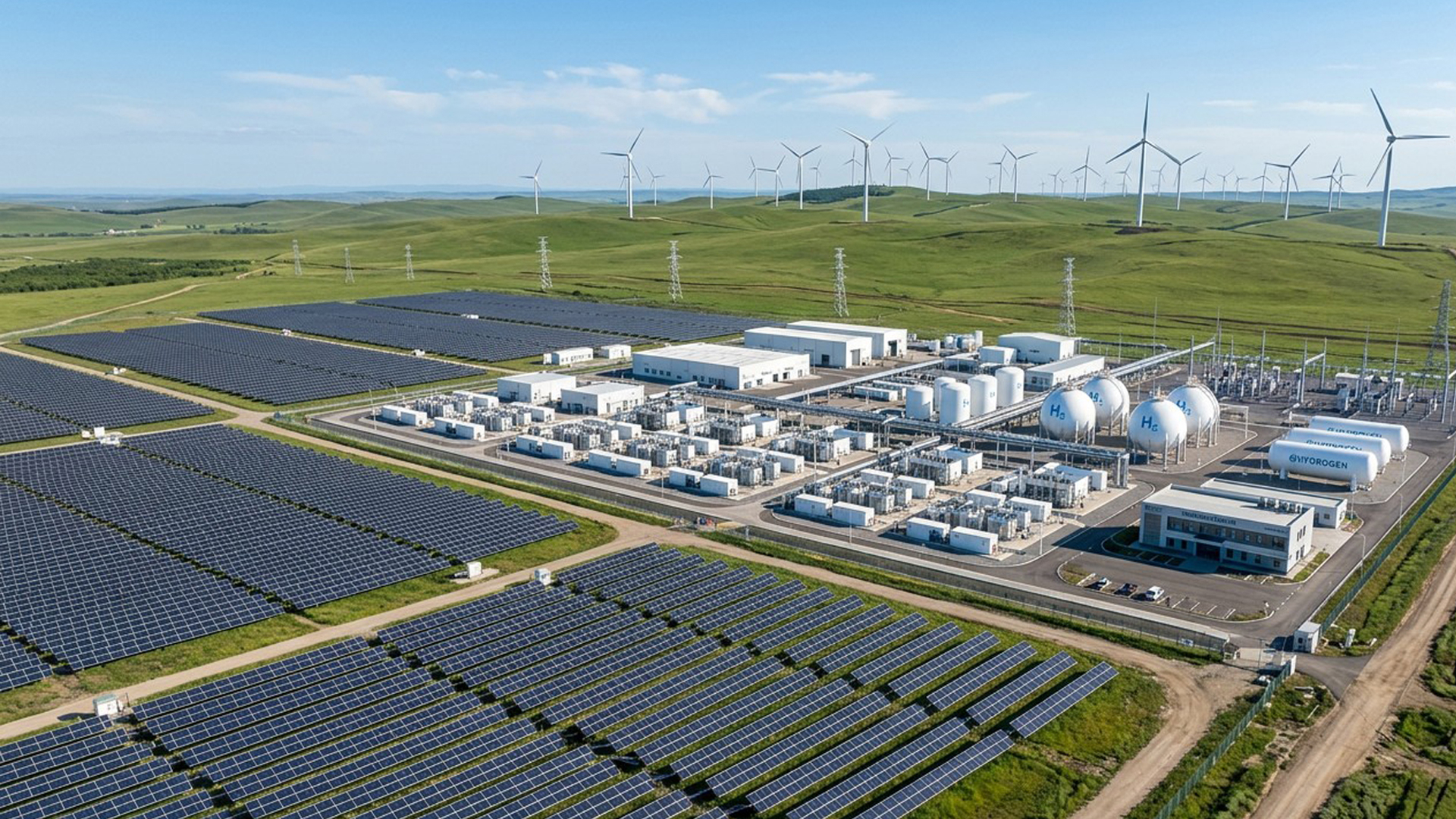
Hydrogen plays a key role in this process. By converting surplus electricity generated from renewable energy into hydrogen, the gap between when energy is produced and when it is used can be effectively reduced. Hydrogen also helps respond to grid variability and output curtailment while enhancing the resilience of the energy system. Furthermore, hydrogen can be utilized across industry, mobility and power generation, expanding the range of energy applications.
Converting the surplus electricity discussed above into hydrogen could produce approximately 65,000 tons of hydrogen annually, enough to power approximately 540,000 NEXO fuel cell electric vehicles for one year.
What technology makes it possible to convert electricity into hydrogen? The answer is water electrolysis.
Water electrolysis uses electricity to split water (H₂O) into hydrogen (H₂) and oxygen (O₂), enabling electricity generated from renewable energy to be converted into hydrogen.
Among the various water electrolysis technologies, PEM (Proton Exchange Membrane) electrolysis has attracted particular attention because it offers a fast response to fluctuations in power output and achieves higher current density, allowing it to respond more flexibly to the variability of renewable energy.
Water electrolysis serves as a link that expands the use of renewable energy by producing hydrogen that can be utilized across a wide range of sectors, including industry and mobility.
Furthermore, it provides a practical means of transforming electricity that would otherwise go unused into a valuable energy asset. If Korea achieves its 2035 renewable energy deployment target, converting 7 TWh of the projected 9 TWh of surplus electricity into hydrogen through 1 GW of water electrolysis facilities could replace approximately 5.5 million barrels of crude oil imports while creating an estimated KRW 500–600 billion in economic value.
※ What is PEM Electrolysis? A Core Technology for Renewable Hydrogen Production
• PEM (Proton Exchange Membrane) electrolysis is a representative Power-to-Hydrogen technology that uses electricity to split water into hydrogen and oxygen, converting renewable electricity into hydrogen.
• This technology is based on the reverse reaction of a hydrogen fuel cell and produces high-purity hydrogen through electrochemical reactions.
• PEM electrolysis offers a fast response to fluctuations in power output and achieves higher current density, allowing it to respond flexibly to renewable energy sources such as solar and wind, which are characterized by high variability. Compared with alkaline water electrolysis, it offers advantages in faster start-up and superior load-following performance.
• Building on nearly 30 years of fuel cell technology, Hyundai Motor has secured core capabilities in PEM electrolysis components and system design based on its expertise in electrochemical reaction control, stack design and system integration developed through fuel cell system development. Through the commonization of technologies and components, the company has achieved a localization rate of more than 90%.
• Hyundai Motor has completed certification of a 1 MW-class PEM electrolysis system capable of producing approximately 400 kg of clean hydrogen. Leveraging their EPC capabilities, Hyundai Engineering & Construction and Hyundai Engineering are participating in 1 MW-class water electrolysis-based hydrogen production projects in Buan and Boryeong, respectively. In collaboration with Jeju Province, Hyundai Motor Group plans to develop a 5 MW-class PEM electrolysis system by 2029 and construct a 200 MW water electrolysis plant in the Saemangeum Hydrogen AI City by 2029.
To expand the use of renewable energy, technologies capable of storing the energy that has been generated are essential.
Today, battery-based ESS (Energy Storage Systems) are widely used. However, they have limitations in terms of storage duration and capacity. As the share of renewable energy continues to grow, the need for solutions capable of storing large amounts of energy over longer periods is becoming increasingly important. One such solution attracting attention is H-ESS (Hydrogen Energy Storage System).
Rather than storing electricity directly, H-ESS converts electricity into hydrogen for storage, enabling long-term, large-scale energy storage. One kilogram of hydrogen, occupying a volume of approximately 24 liters, can store about 33.3 kWh of energy. By comparison, storing the same amount of energy in a battery requires a battery weighing approximately 130 kg with a volume of about 56 liters. Hydrogen can also be stored in various forms—including gas, liquid and solid—making it highly scalable. This is why hydrogen is called a lightweight yet powerful 'energy carrier’.
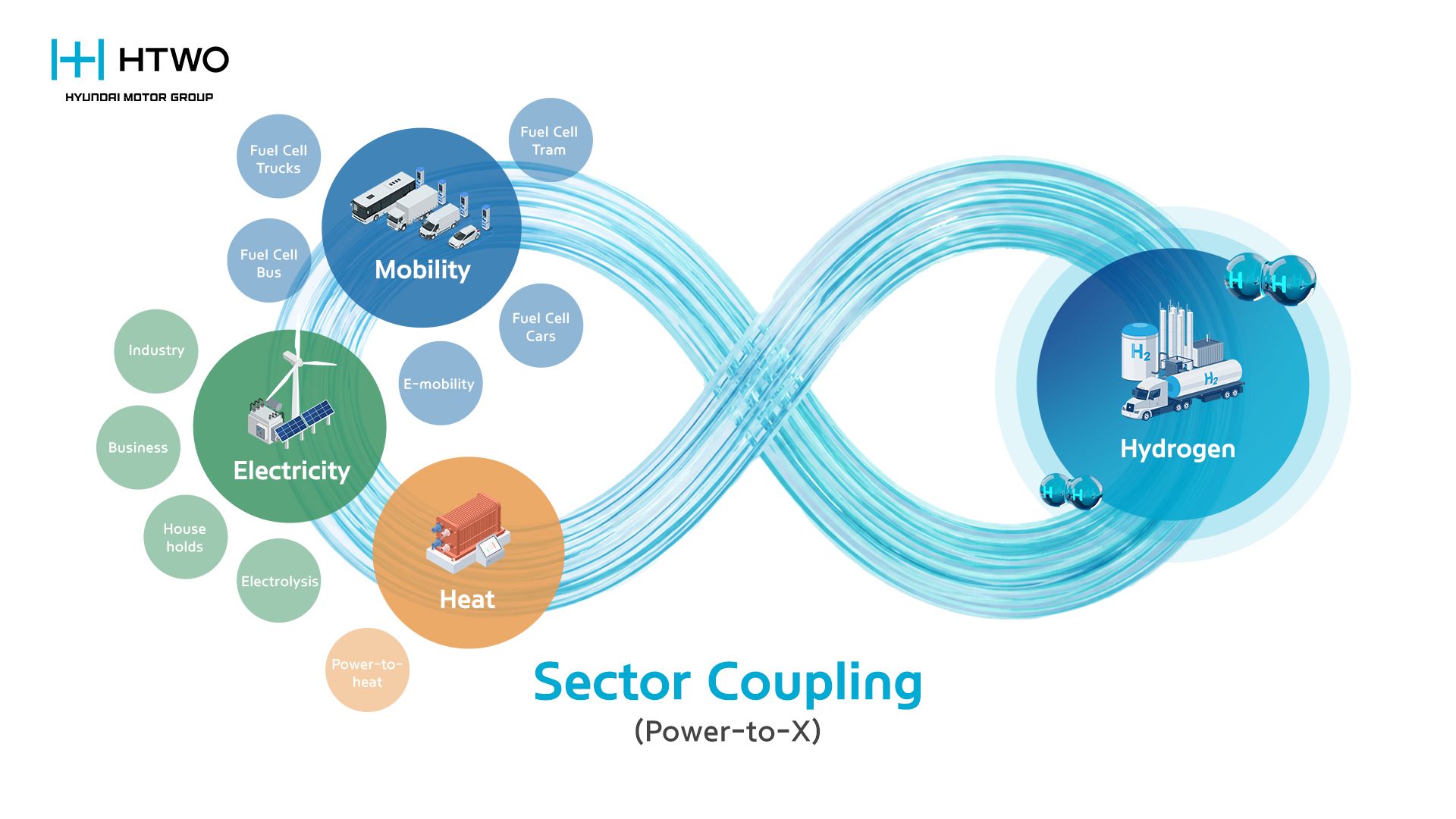
These characteristics enable hydrogen to be utilized across a wide range of sectors beyond energy storage. In particular, hydrogen is gaining attention as a key means of Sector Coupling across the power, industry, mobility and heat sectors. Electricity generated from renewable energy can be converted into hydrogen and utilized in various forms, including fuel for power generation, feedstock for industrial processes, mobility fuel and heat energy. In other words, energy produced in the power sector can be expanded to the industrial and transportation sectors through hydrogen.
This is particularly meaningful in sectors where decarbonization cannot be achieved through electrification alone. Hydrogen can be used as a feedstock in the steel and chemical industries, while its high energy density makes it an important alternative for commercial vehicles, railways, ships and aviation that require long-distance transportation. As a medium that connects energy storage and utilization, hydrogen enhances the flexibility of the energy system while accelerating decarbonization across sectors.
The key to energy security is not simply securing more energy, but building an energy system that can operate reliably despite external disruptions and internal variability.
As an 'energy carrier,' hydrogen helps manage this variability by easing the constraints of both the 'time' and 'space' of energy. By converting electricity generated from renewable energy into hydrogen for storage, the gap between when energy is produced and when it is used can be reduced. In addition, stored hydrogen can be transported and utilized across different regions, reducing the distance constraints between where energy is produced and where it is consumed.
Furthermore, hydrogen is an 'energy carrier' that connects power, industry, mobility and heat sectors and expands the range of energy applications. Surplus renewable electricity can be converted into hydrogen through water electrolysis, stored, and then converted into the form of energy needed when it is needed, enabling distributed energy utilization. This helps reduce the transmission burden on the power grid while enabling energy resources to be used more efficiently.
Ultimately, hydrogen organically connects the production, storage, transportation and utilization of energy. By improving the efficiency of renewable energy, it plays a key role in building a more sustainable and resilient energy system.
※ Some images used in this content were created using generative AI.