Hydrogen Supply

Creating Energy Flow Across the Hydrogen Ecosystem

Hyundai connects every stage of hydrogen storage, transportation, and refueling to seamlessly link supply and demand, delivering hydrogen wherever it is needed, efficiently and reliably.
Through diverse storage and transportation technologies, we expand how hydrogen can move and be used, while strengthening infrastructure with innovative refueling solutions that make hydrogen more accessible and convenient.

  • Hyundai Motor Company
  • Hyundai Glovis
  • Hyundai Rotem

Storage

Tailored Hydrogen Storage
Solutions for Diverse Applications

Hydrogen occupies a large volume in its gaseous state, but its energy density can be significantly increased through advanced storage technologies. Hyundai is developing technologies that enable hydrogen to be stored efficiently and delivered reliably, supporting long-distance transport and a wide range of applications.

While compressed gas storage is already widely commercialized through established infrastructure, liquid and solid-state storage technologies continue to evolve to unlock the advantages of higher energy density.

Using high-pressure compression technology, hydrogen is stored at pressures of up to 700 bar, significantly improving space efficiency. This enables more hydrogen to be stored within a limited volume, making it the most widely used storage method for hydrogen mobility applications. Hydrogen stored in high-pressure tanks is delivered to refueling stations via tube trailers.

  • Key Advantages : Commercially mature and widely adopted
  • Applications : Passenger fuel cell vehicles and commercial vehicles
High-pressure tank storing compressed hydrogen gas
Storage Conditions
350 bar / 700 bar Ambient Temperature, High Pressure
Storage Density
40.2 kilograms per cubic meter *at 700 bar, 15°C
Operating Pressure
350 bar / 700 bar High Pressure

Transportation

Low-Carbon Energy Transportation and Logistics Solutions

Leveraging Hyundai Glovis' extensive logistics expertise, Hyundai is advancing low-carbon transportation solutions across the hydrogen ecosystem. Building on decades of experience in LNG and LPG shipping, we are preparing for the future transport of liquefied hydrogen, ammonia, and liquefied CO₂ while expanding low-carbon logistics services across domestic and international operations.

  • Low-Carbon Energy
    Maritime Transport

    Expansion of LNG and LPG maritime transport and future maritime transport of liquefied hydrogen, ammonia, LCO₂, etc.

  • Overseas Low-Carbon Logistics Services

    Providing low-carbon logistics services in North America through participation in NorCAL ZERO in the California region.

  • Low-Carbon Energy
    Inland Transport

    Hydrogen Land Transport

  • Domestic Low-Carbon Logistics Services

    Providing low-carbon logistics services centered on
    major domestic hubs (Group affiliates' factories and business sites)

Hyundai's Low-Carbon Logistics Service Strengths

  • Transportation Expertise-Based Services

    • Providing customized services by leveraging our capabilities in related areas such as inland and maritime transportation and storage
    • Providing efficient transportation services through hydrogen supply chain optimization
  • Global Logistics Network

    • Our extensive network of domestic and international hubs enables the development of efficient hydrogen supply chains worldwide, enhancing reliability, responsiveness, and operational accuracy.

Low-Carbon Logistics Service Process

  1. Step 1

    Low-Carbon Energy Shipments

    Overseas low-carbon Energy Shipment

    • + Hydrogen
    • + Ammonia
    • + LNG
  2. Step 2

    Low-Carbon Energy Maritime Transport

    Transportation of low-carbon energy sources via low-carbon fuel vessels

    • + Low-Carbon Energy Carrier
  3. Step 3

    Low-Carbon Energy Land Transport

    Domestic transportation of low-carbon energy between hubs and users

    • + Hydrogen Tube Trailer
  4. Step 4

    Low-Carbon Logistics

    Providing low-carbon logistics services through the use of low-carbon transportation methods

    • + Fuel Cell Electric Car Transporter
    • + Fuel Cell Electric Truck

Refueling

Expanding Hydrogen Refueling Infrastructure Through Tailored Solutions

A robust refueling network is essential to accelerating the hydrogen economy. Hyundai develops hydrogen refueling solutions tailored to diverse operating environments, site conditions, and demand profiles, delivering greater convenience, operational efficiency, and scalability.

  • Stationary hydrogen refueling station with a fuel cell electric vehicle refueling

    For High-Volume, Continuous Demand

    Stationary-type HRS

    It is a basic charging solution that stably supplies hydrogen to various mobility needs at key locations with high volume or continuous demand.

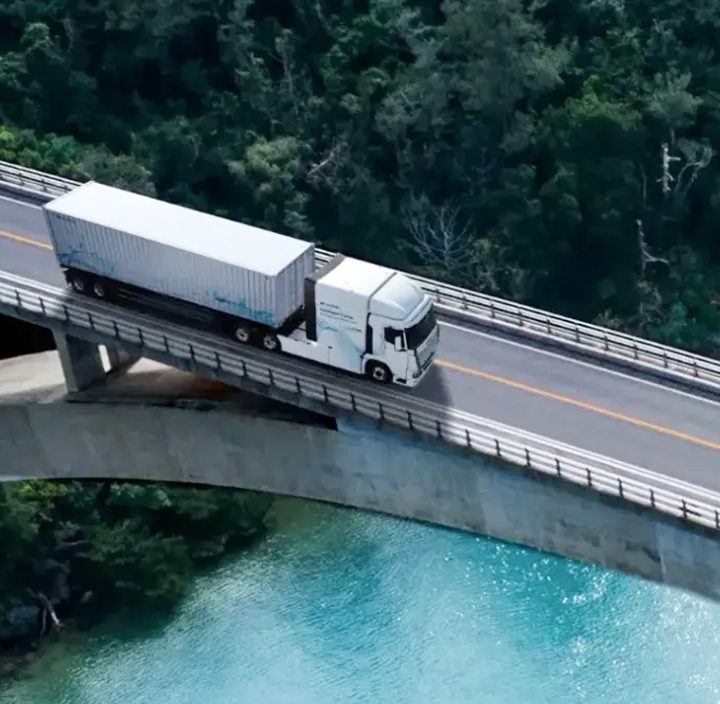
  • Mobile hydrogen refueling station truck carrying refueling equipment

    For Flexible Deployment Across Changing Demand

    Mobile-type HRS

    We operate charging stations flexibly in various locations rather than keeping them fixed. Charging stations move directly to areas with low demand to identify new needs, while increasing operational efficiency through distributed placement in areas with high demand.

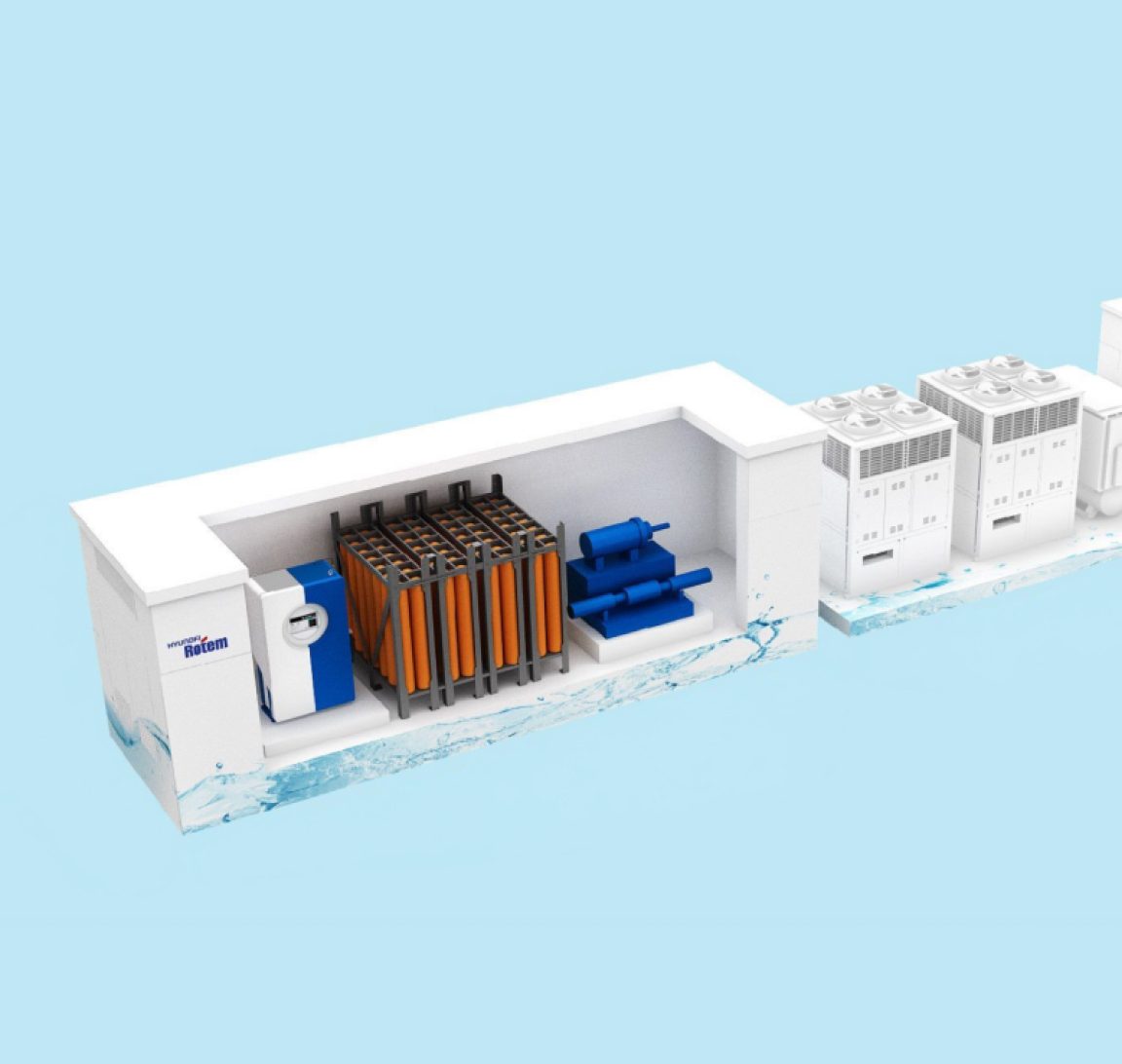
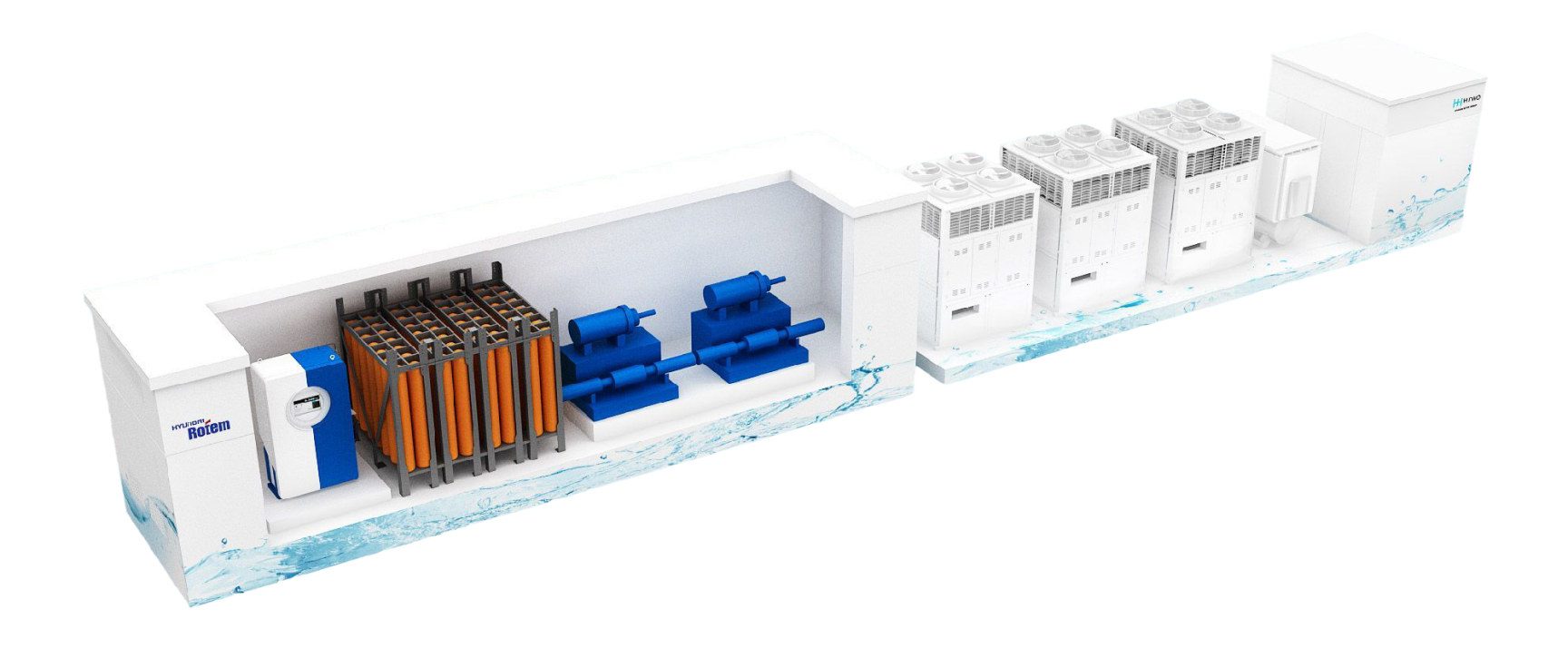
  • Interior of a packaged hydrogen refueling station built from container modules

    For Sites with Limited Space and Growing Demand

    Packaged-type HRS

    The container modular design reduces installation space and shortens construction time. It allows for flexible expansion to meet demand through the parallel installation of additional package modules.

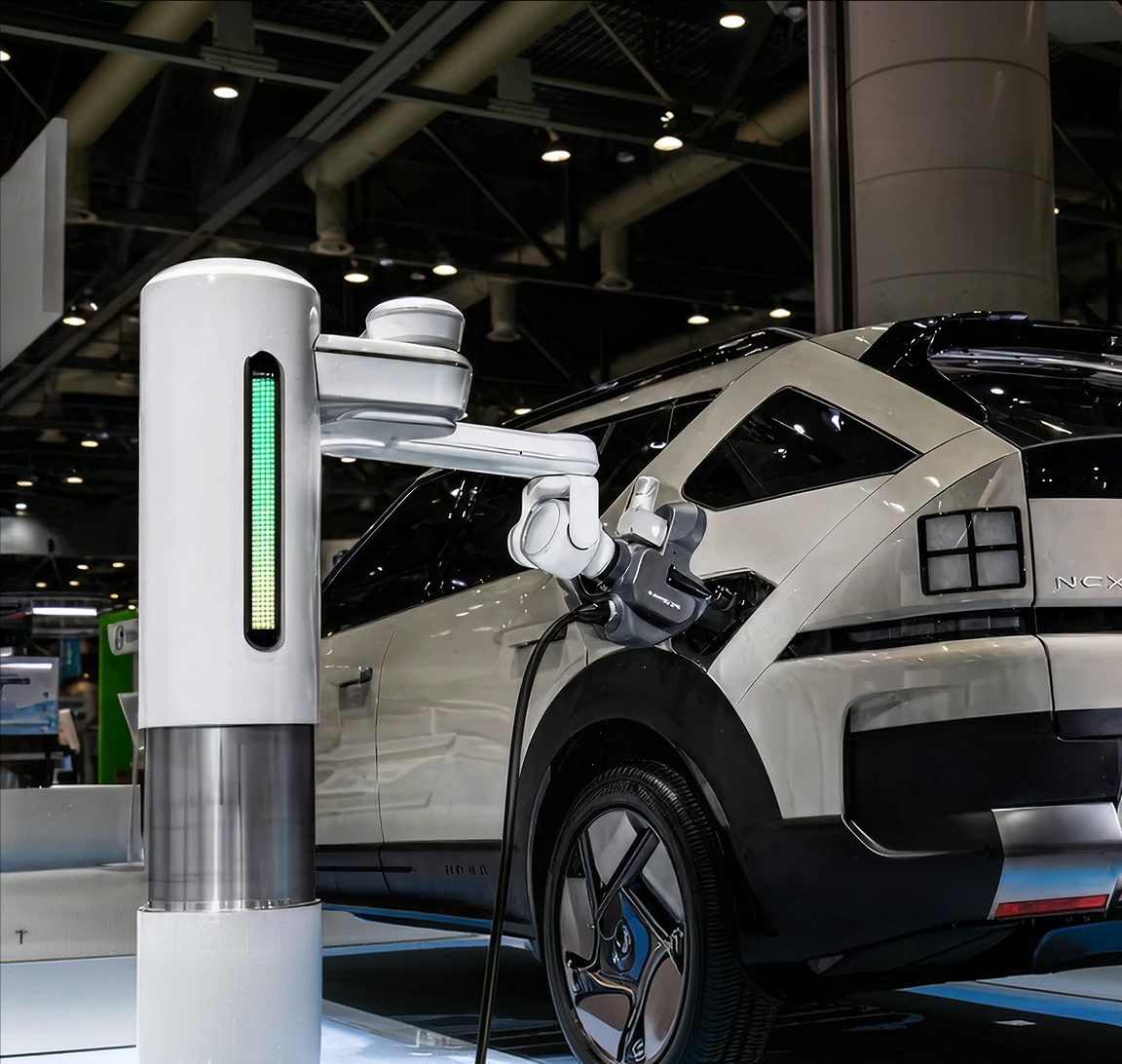
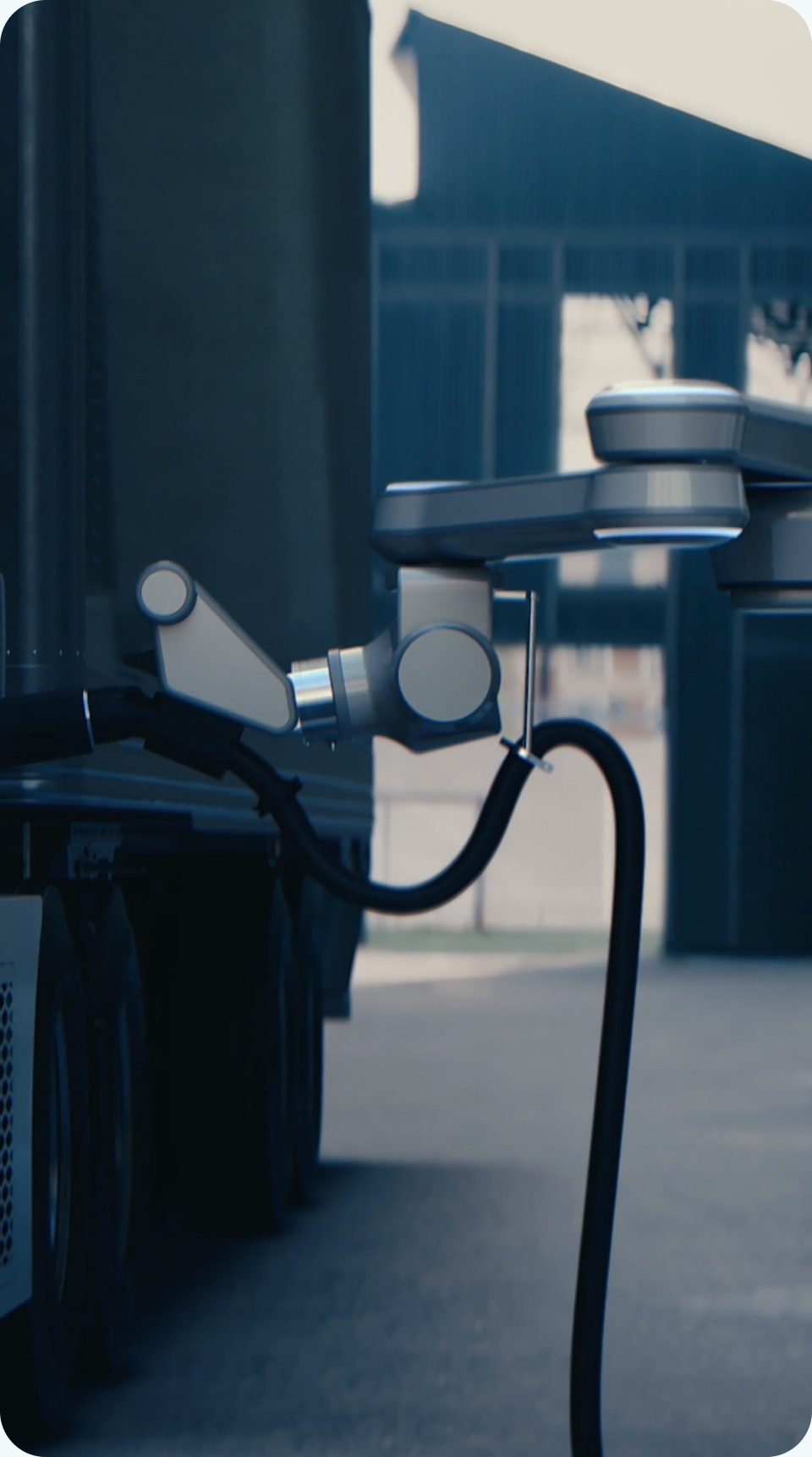
  • Automatic charging robot connecting a refueling nozzle to a fuel cell electric vehicle

    For Fully Automated, 24/7 Operation

    Automatic Charging Robot-Hydrogen (ACR-H)

    By utilizing robots to automate the entire process from vehicle recognition to charging, we provide a convenient charging experience for anyone, anytime. Stable 24-hour operation is possible through remote monitoring.

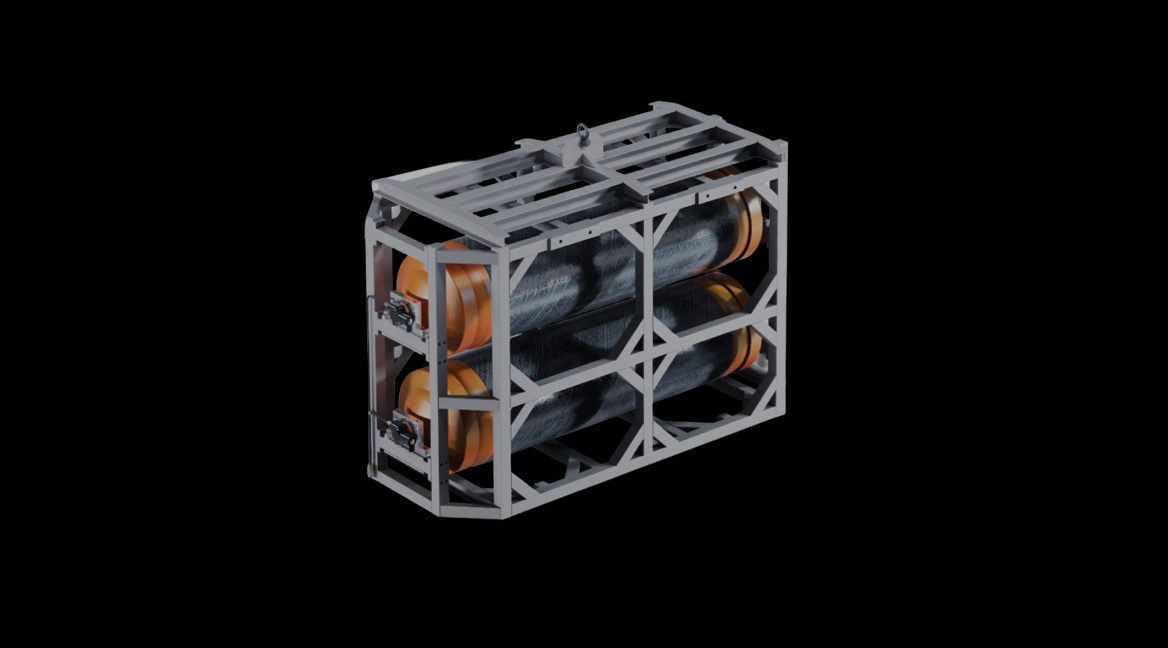
  • Tank module of a swappable hydrogen storage system

    For Locations Where Refueling Infrastructure Is Not Available

    Module Exchange-type HRS

    It immediately supplies the necessary hydrogen by replacing only the hydrogen storage module using a tank module exchange method, without the need for separate charging facilities.

Core Infrastructure of the Hydrogen Ecosystem

Stationary-type HRS

Stationary-type Hydrogen Refueling Station

Hydrogen is compressed, cooled through a heat exchanger inside the dispenser, and delivered to a wide range of hydrogen-powered mobility solutions, including passenger vehicles, trucks, buses, and trams. Hyundai Rotem's hydrogen dispenser complies with international fueling standards and currently supports fueling rates of up to 60 g/s. Hyundai is also developing fast refueling technology capable of delivering up to 300 g/s.

Fuel cell electric vehicle refueling under the canopy of a stationary hydrogen refueling station

Key Advantages

  • Scalable Foundation for Hydrogen Mobility

    Deployed at key locations such as highways, logistics hubs, and depots, stationary hydrogen refueling stations serve as essential infrastructure for the expansion of hydrogen mobility.

  • High Operational Efficiency Through Fast Refueling

    Short refueling times of approximately 5 minutesnote 1 for fuel cell electric passenger vehicles and 20 minutesnote 2 for commercial vehicles maximize vehicle utilization and operational efficiency.

    1) Based on a hydrogen fill of 6.7 kg and a final state of charge of 95%
    2) Based on a hydrogen fill of 25 kg and a final state of charge of 95%

  • Reliable Supply for High-Volume, High-Demand Applications

    Designed to support large-scale hydrogen consumption, these stations provide a stable and reliable supply for a wide range of mobility applications, including buses and heavy-duty trucks.

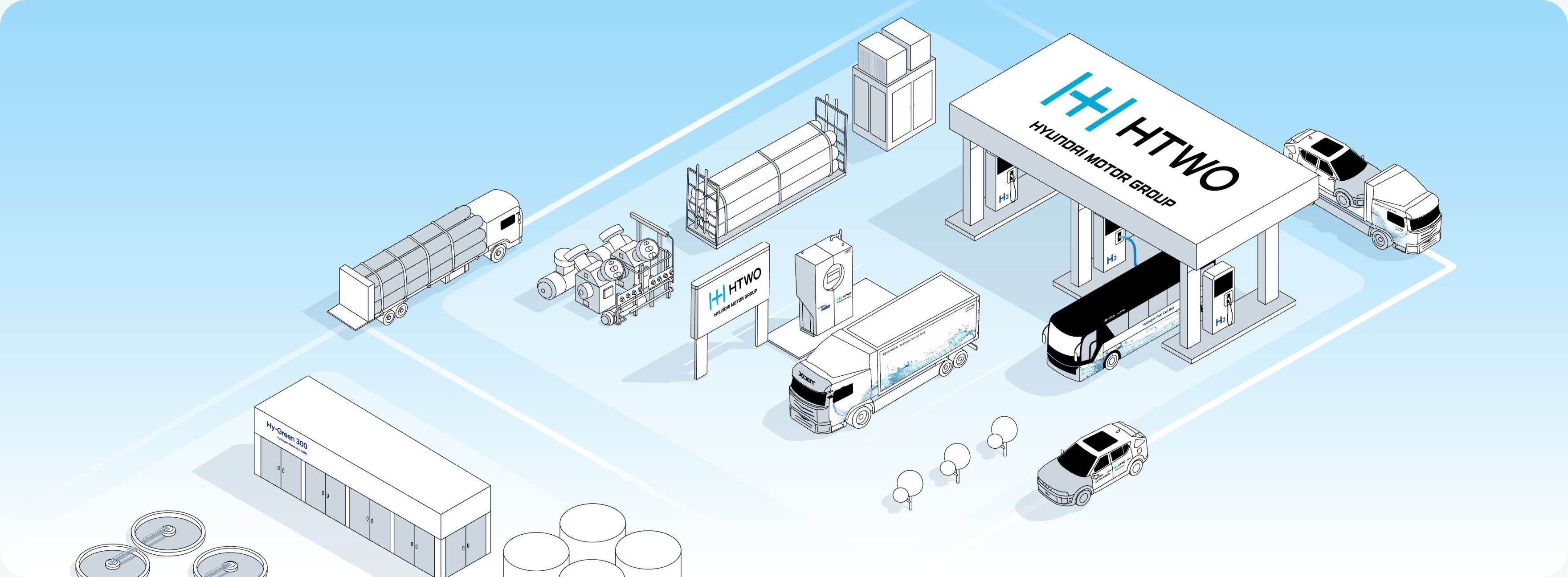
Aerial view of a stationary hydrogen refueling station — hydrogen supply units, compressor, hydrogen storage tank, cooling system and hydrogen dispenser

Key Components of a Stationary Hydrogen Refueling Station

  • Utilizes hydrogen produced on-site through reformers or electrolysis units and receives externally supplied hydrogen via tube trailers and pipelines

  • Pressurizes low-pressure hydrogen to the required level for vehicle refueling

  • Holds compressed hydrogen safely until dispensing

  • Cools hydrogen before dispensing to prevent temperature rise and ensure safe refueling

  • Controls the required amount, pressure, and temperature for each mobility type and refueling hydrogen into the mobility

Bringing Refueling Directly to Demand

Mobile-type HRS

H2 Moving Station

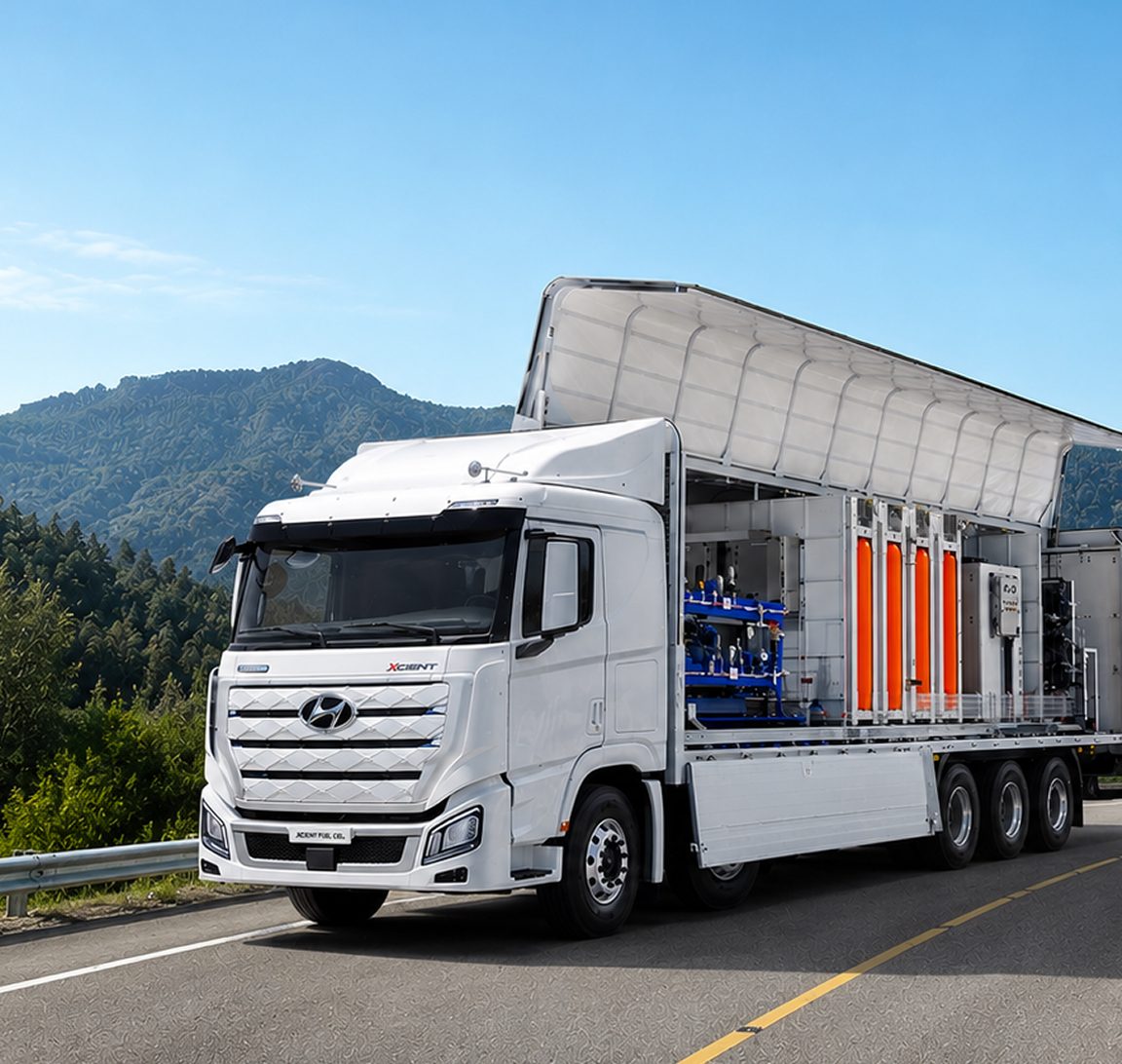
H2 Moving Station is a fully integrated hydrogen refueling solution mounted on a truck or large trailer, combining key components such as hydrogen compressors, storage tanks, cooling systems, and dispensers. Designed for flexibility, it can be deployed wherever hydrogen is needed, helping expand infrastructure in areas where fixed stations are impractical and supporting the development of emerging demand.

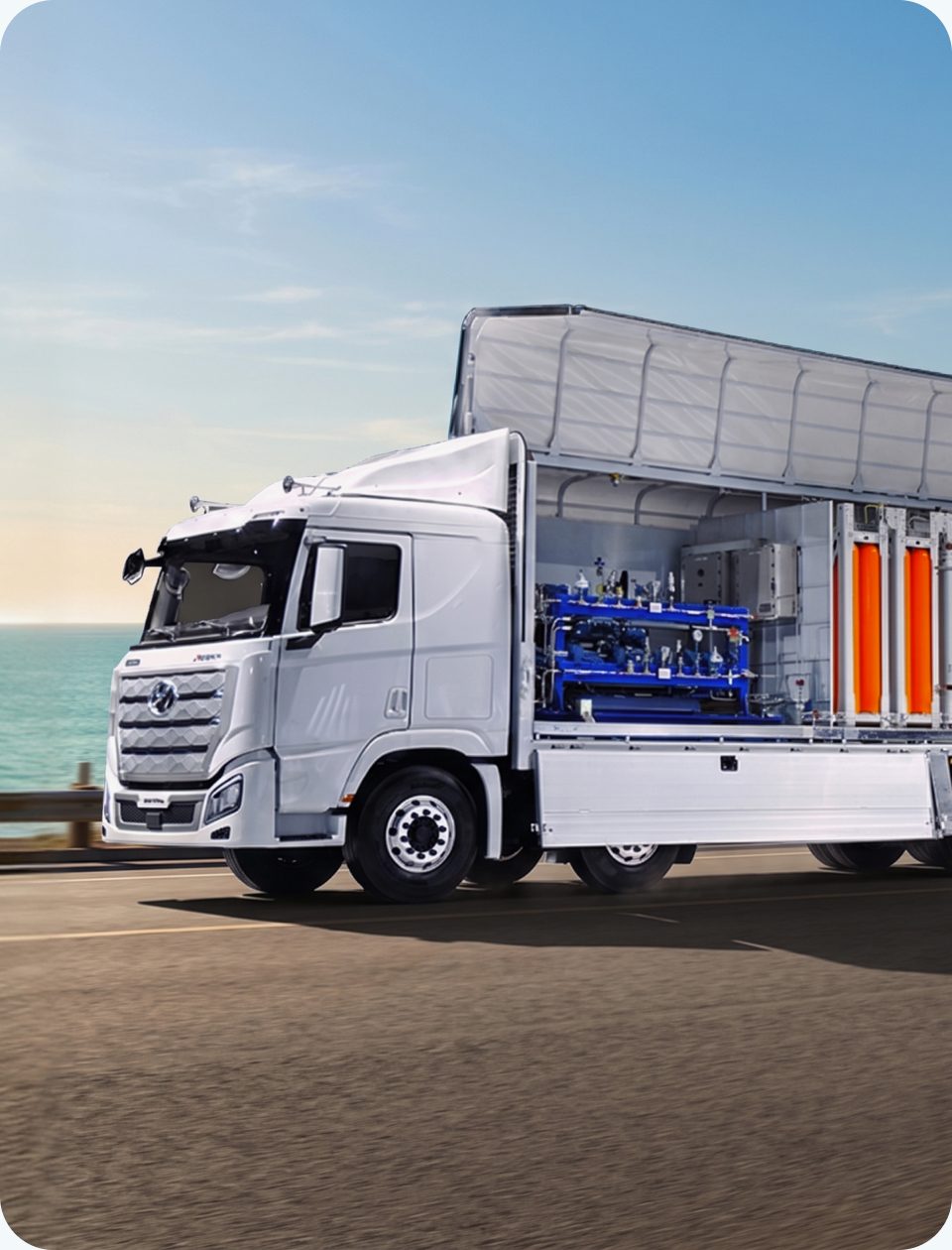
Mobile hydrogen refueling station truck with its wing body open, revealing the refueling equipment

Key Advantages

  • Supporting Early Demand Development

    Deployed first in areas where stationary hydrogen refueling stations are difficult to establish, mobile hydrogen refueling stations help support the development of early hydrogen mobility demand.

  • Reducing Congestion at High-Demand Stations

    By supplementing existing refueling infrastructure, mobile stations help alleviate waiting times and improve accessibility in high-demand urban areas.

  • Flexible Deployment in Space-Constrained Locations

    Their compact footprint enables installation in narrow sites and underutilized spaces where stationary stations may be difficult to develop.

Side view of a mobile hydrogen refueling station truck driving along a coastal road

Types

Key Components
Tractor +
Low-Floor Trailer Wing Body
Net Occupied Area*
Approx. 42 msquare meters
Refueling Pressure
700 bar
Number of Hydrogen Fuel Cell Electric Vehicles Refueled per Hour
5 NEXO units/hour
Hydrogen Dispensed per Vehicle**
Up to 4.5 kg

※ Net Occupied Area: Refers to the area of the mobile charging station facilities; excludes ancillary facilities such as on-site connection facilities, T/T connection, and office management buildings.
* Based on a 4.5 kg hydrogen fill and a final state of charge of 95% (Hyundai NEXO)

A Modular Refueling Solution Designed for Space Efficiency

Packaged-type HRS

Packaged-type Hydrogen Refueling Station

Currently under development by Hyundai Motor Company and Hyundai Rotem, the Packaged Hydrogen Currently under development by Hyundai Motor Company and Hyundai Rotem, the Packaged-type Hydrogen Refueling Station is a modular solution that packages core refueling equipment into containerized units. By addressing the challenges of conventional stationary stations, such as high deployment of hydrogen refueling infrastructure through a simpler and more space-efficient design.

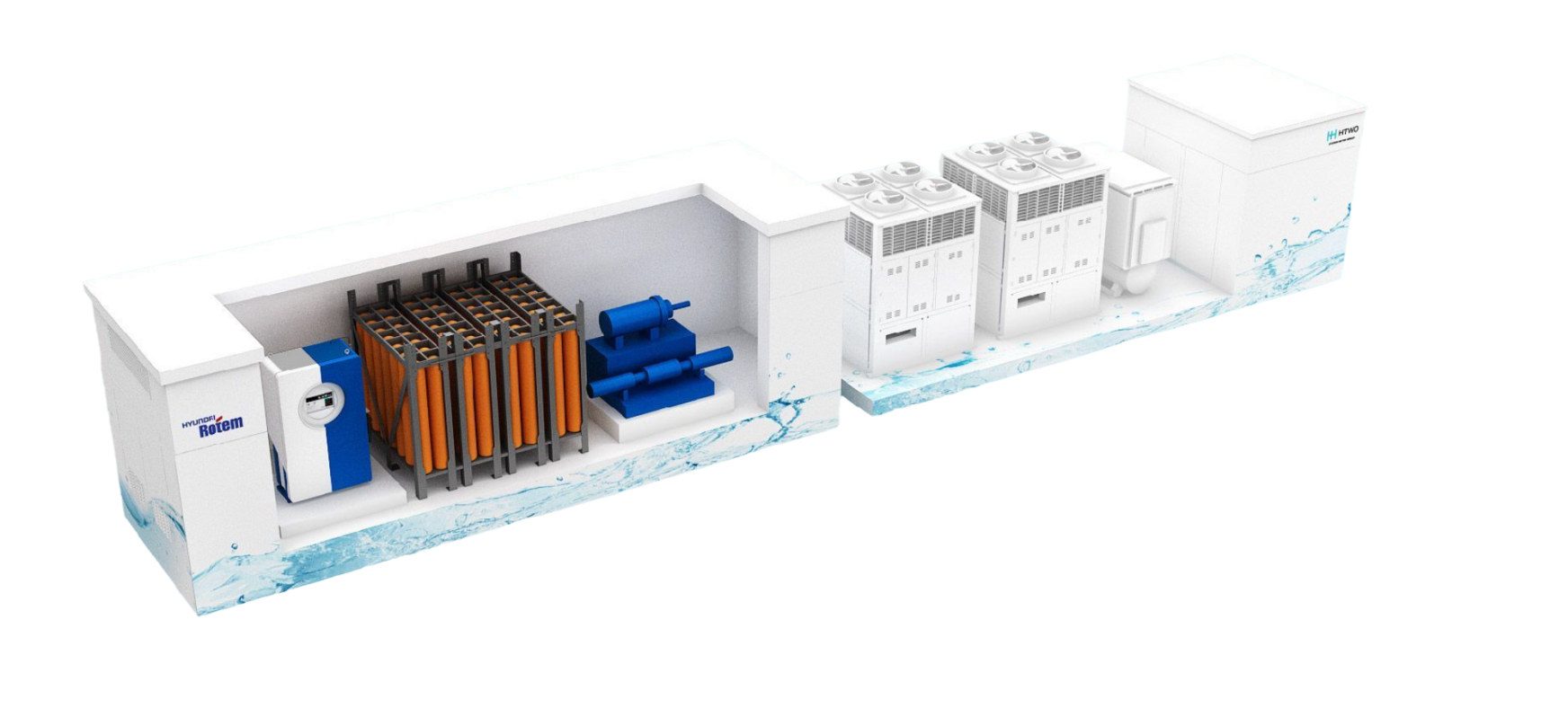
Packaged hydrogen refueling station built from container modules arranged side by side

Key Advantages

  • Lower Construction Costs

    Containerized modularization reduces civil engineering and construction costs by approximately 33%.

  • Faster Deployment and Relocation

    Modules can be quickly transported, installed, and relocated using standard crane operations.

  • Space-Efficient Design

    Requires up to 40% less installation space than conventional station designs.

  • Shorter installation time

    Reduces installation time by an average of 2.5 months, from 3.5 months to just 1 month.

Types

  • Small-Scale
    Interior of a small-scale packaged hydrogen refueling station module — compressor, hydrogen storage vessels and cooling equipment arranged inside a container
    Target Vehicles
    Passenger vehicles (NEXO)
    Hydrogen Dispensed per Vehicle
    Up to 5 kg
    Refueling Capacity
    6 NEXO units/hour

    * Based on a 5.0 kg hydrogen fill and
    a final state of charge of 95% (Hyundai NEXO)

  • Medium/Large-Scale
    Interior of a medium/large-scale packaged hydrogen refueling station module — high-capacity compressor, hydrogen storage vessels and cooling equipment arranged inside a container
    Target Vehicles
    Commercial Vehicles
    (Bus/Truck)
    *Passenger vehicle refueling available
    Hydrogen Dispensed per Vehicle
    Up to 25kg
    Refueling Capacity
    Approximately
    2 commercial vehicles/hour

    * Based on a 25 kg hydrogen fill and a final state of charge of 95%
    (Hyundai ELEC CITY Fuel Cell Bus)

※ Modules can be configured horizontally or vertically and expanded in parallel to increase both capacity and the number of dispensers.

Automated Refueling Robot for Hydrogen Vehicles

Hydrogen Electric Vehicle Automatic Charging Robot

Automatic Charging Robot-Hydrogen (ACR-H)

ACR-H is an automated refueling robot designed to provide a convenient, 24/7 hydrogen refueling experience. Powered by advanced AI technology, it automates the entire process from vehicle recognition to hydrogen refueling. Currently under development, ACR-H is designed to enhance operational efficiency through real-time remote monitoring and enable stable, around-the-clock operation.

Automatic charging robot connecting a refueling nozzle to a hydrogen vehicle's refueling port
How ACR-H Works

Key Advantages

  • Advanced Vision AI Technology

    Identifies vehicle type, license plate information, and parking position, while precisely detecting the location and angle of the vehicle's refueling port.

  • High-Precision Control Technology

    Utilizes force and torque sensors to accurately and reliably connect the refueling nozzle to the vehicle's refueling port.

  • International Standard-Based Safety Design

    Built on internationally recognized safety standards, it delivers reliable and safe operation throughout the entire refueling process.

Convenient Hydrogen Module Exchange System

Module Exchange-type HRS

Swappable Hydrogen Storage System

The Swappable Hydrogen Storage System utilizes a tank module exchange approach, allowing hydrogen to be supplied without dedicated refueling facilities. Currently under development, it is an innovative solution designed to overcome the challenges of expanding hydrogen refueling infrastructure.

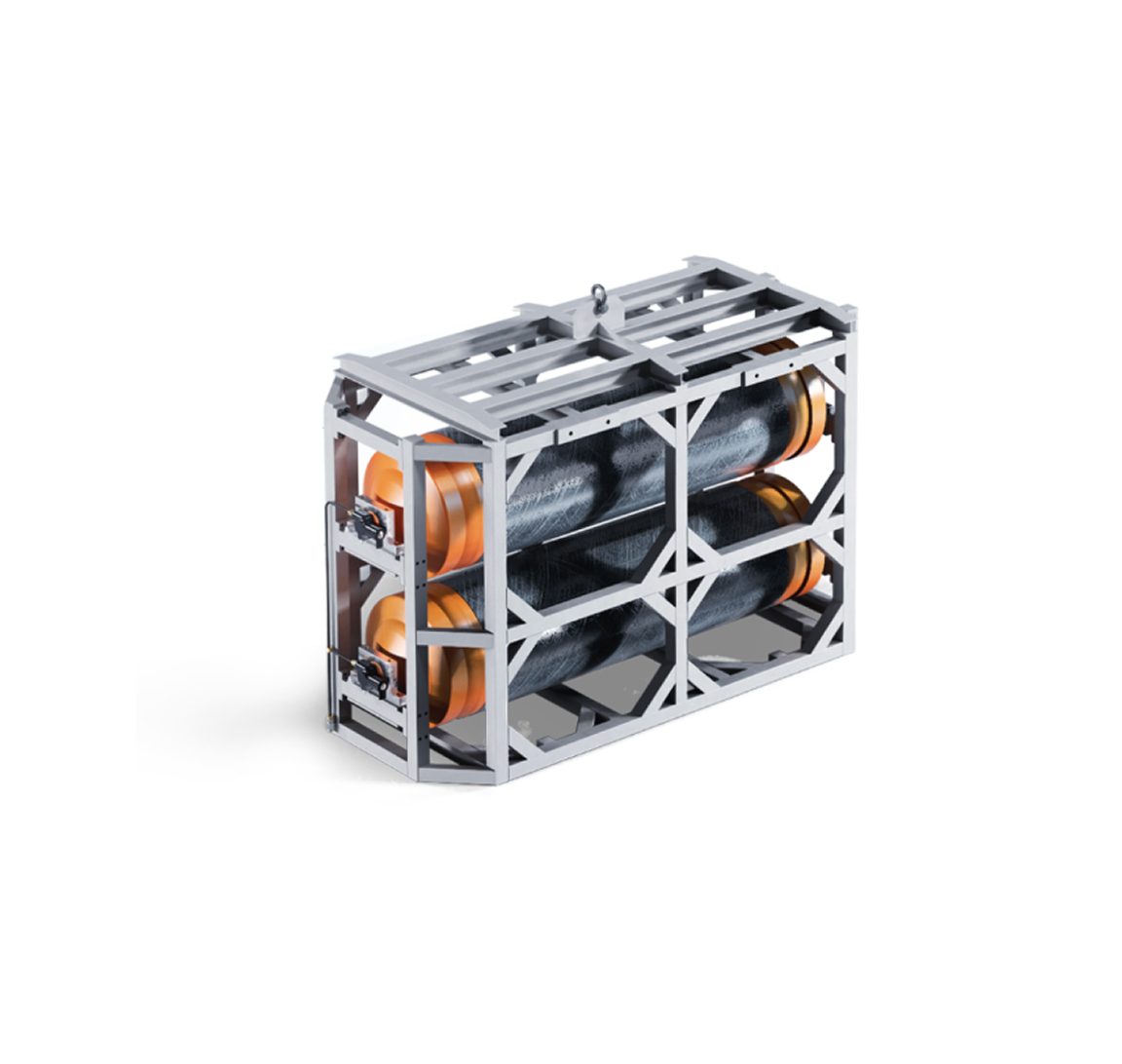
Swappable hydrogen storage system with tank modules mounted inside a frame structure

Key Advantages

  • Infrastructure-Independent Scalability

    Enables rapid deployment and expansion without the need for dedicated refueling infrastructure.

  • Efficient Hydrogen Supply Through Module Exchange

    A simple tank module exchange process minimizes downtime and enhances operational efficiency.

Specifications

For Fuel Cell Electric Trucks
Hydrogen Storage Capacity
48.15kg
Hydrogen Tank Specifications
1,179.3 liters diameter 620 millimeters, length 2,020 millimeters, 3 units
For Mobile Generators
Hydrogen Storage Capacity
28.6kg
Hydrogen Tank Specifications
700.0 liters diameter 445 millimeters, length 1,850 millimeters, 4 units
Operating Pressure
High-Pressure Hydrogen Storage
700 bar

System Exchange Method

Mobile Generator Application

Crane-liftable frame structure holding swappable hydrogen storage tank modules
  1. The empty hydrogen storage tank module is removed using a crane.

  2. The crane's rotating arm transfers the tank module away from the system.

  3. The refilled hydrogen storage tank module is lifted into place and reinstalled.

  4. Hydrogen supply to the fuel cell system is restored via a quick-connect interface.

Business

Hydrogen Infrastructure Expansion

  • Dangjin Hydrogen Distribution Center panoramic view

    Dangjin Hydrogen Distribution Center

    By-product hydrogen distribution from steel mills

    Participating Affiliates

    • Hyundai Motor Company
    • Hyundai Steel
    • Hyundai Glovis
    • Hyundai Rotem
  • Hyundai H Station hydrogen refueling station

    H Station

    Construction and operation of Hyundai hydrogen refueling stations

    Participating Affiliates

    • Hyundai Motor Company
  • HyNet hydrogen refueling station with refueling vehicle

    HyNet Hydrogen Refueling Station

    Construction and operation of passenger and commercial hydrogen refueling stations

    Participating Affiliates

    • Hyundai Motor Company
  • Hydrogen refueling station charging system equipment

    Hydrogen Refueling System Supply

    Supply of systems and equipment for on-site and off-site hydrogen refueling facilities

    Participating Affiliates

    • Hyundai Rotem
  • Gwangjin H2 Moving Station mobile hydrogen refueling vehicle

    Gwangjin H2 Moving Station

    Korea's first mobile hydrogen refueling station - construction and operation

    Participating Affiliates

    • Hyundai Motor Company
    • Hyundai Glovis
    • Hyundai Rotem
  • Jeju H2 Moving Station operation site

    Jeju H2 Moving Station

    Korea's first green hydrogen-linked hydrogen refueling station - construction and operation

    Participating Affiliates

    • Hyundai Motor Company
    • Hyundai Rotem

FAQ

Questions About Hydrogen Supply

  • In its gaseous state, hydrogen has a low density per unit volume, requiring extremely large storage tanks to store it as a gas. Therefore, processes to reduce its volume are necessary for storing large quantities of hydrogen, such as compressing it to high pressure or cooling it to convert it into a liquid state.

    Hydrogen can be stored in various ways as follows, enabling easy storage and long-distance/large-volume energy transport.

    - Compressed in gaseous state: Hydrogen gas is compressed to pressures exceeding 700 times atmospheric pressure. This is the most common storage method currently used for hydrogen vehicles and industrial hydrogen. Compared to other storage methods like liquefaction or solid storage, it has a lower density per unit volume and requires significant energy consumption for compression.

    - Liquefaction: Hydrogen is cooled to an ultra-low temperature of -253°C to store it as a liquid. This allows direct use of hydrogen without chemical conversion. Although energy is consumed during the liquefaction process, it is advantageous for long-distance/large-volume transportation.

    - Conversion: Hydrogen can also be stored by combining it with other substances. Representative methods include synthesizing it into liquid chemicals like ammonia (NH3) or liquid organic hydrogen carriers (LOHC). This method leverages existing transportation infrastructure and offers advantages for large-scale maritime and land transport.

    - Solid: This method stores hydrogen by adsorbing it onto solid materials or chemically binding it. It possesses a higher volumetric density than gas compression or liquefaction methods, and despite its small volume, it is heavy, making it suitable for use in submarines or drilling rigs.

    - Natural terrain utilization storage: This method utilizes natural cavities like salt domes or depleted gas fields. Developed to address seasonal and temporary spikes in energy demand and enhance energy security, it is recognized as the most economical approach for storing large volumes of hydrogen within existing natural environments.

  • As the lightest element in the universe, hydrogen rapidly disperses into the air in the event of a leak. However, hydrogen vehicles such as the NEXO are equipped with a variety of advanced safety systems designed to minimize potential risks associated with hydrogen.

    The NEXO’s hydrogen storage system is designed to maintain structural integrity even in the event of a collision or an external fire. In addition, hydrogen detection sensors and a real-time monitoring system continuously monitor fuel levels and pressure changes to proactively prevent accidents caused by hydrogen leaks. Furthermore, the vehicle is equipped with a safety valve that rapidly releases hydrogen into the atmosphere if the temperature around the hydrogen tank rises excessively.

  • Mobile Hydrogen Refueling Stations

    Mobile hydrogen refueling stations can be classified into the following three types according to their operating method. The most suitable method is selected based on site conditions, the urban environment, and operational objectives.

    1) On-Site Production and Supply Integration
    A mobile hydrogen refueling station is deployed at a hydrogen production site, with hydrogen produced on site supplied directly to the station through a pipeline. An example is the Seongnam Water Purification Plant, where green hydrogen produced on site is supplied to a mobile hydrogen refueling station for vehicle refueling.

    2) Tube Trailer-Linked Method
    A tube trailer—a storage unit for transporting gaseous hydrogen—is stationed at the location where the mobile hydrogen refueling station is installed to supply hydrogen. Once the stored hydrogen is depleted through refueling, the tube trailer is replaced with a fully charged trailer, replenishing the hydrogen supply on site.

    3) Mobile Supply from a Hydrogen Dispatch Center
    The mobile hydrogen refueling station vehicle travels directly to a hydrogen dispatch center to receive hydrogen, then returns to its original station location. This enables refueling services and hydrogen replenishment to be carried out in parallel.

    Swappable Hydrogen Storage System

    A swappable hydrogen storage system is a hydrogen supply system in which a hydrogen-filled tank module is removed from a vehicle and replaced as a complete unit. Instead of refueling hydrogen in the same way that gasoline is filled at a service station, hydrogen is replenished by exchanging the pre-filled tank module. However, regulatory exemptions through a regulatory sandbox are required to enable module refueling.

    Advantages over conventional refueling methods are as follows:

    1) Overcoming refueling infrastructure constraints: Areas without hydrogen refueling stations can be served with exchange stations alone.

    2) Minimizing operational downtime: Vehicles can resume operation immediately through module replacement, without waiting for refueling.

  • Hydrogen refueling stations in Korea are operated under a multi-layered safety management system.

    1) Safety Management at the Installation Stage

    Hydrogen refueling stations are equipped with safety devices such as gas detectors*, flame detectors**, and safety valves***. In the event of a gas leak or fire, the system is designed to initiate an immediate shutdown. Emergency events are also immediately transmitted to the central monitoring and control system for response.

    *Gas detector: If the hydrogen concentration exceeds a specified level—set at one-quarter of the lower explosive limit—the detector is activated immediately, even without a flame, and shuts down the refueling equipment. This helps prevent accidents at the hydrogen-leak stage before they can lead to an explosion.

    **Flame detector: Detects flames generated by fires or explosions by sensing ultraviolet and infrared radiation emitted from the flame.

    ***Safety valve: Automatically opens when pressure exceeds the allowable limit, relieving excess pressure to prevent equipment damage and secondary accidents caused by explosions.

    2) Safety Management During Construction and Operation

    From the construction stage, hydrogen refueling stations undergo safety impact assessments, technical reviews, and interim and final installation inspections conducted and certified by the Korea Gas Safety Corporation (KGS). After operations begin, regular gas-leak and safety inspections are conducted on a monthly, semiannual, and annual basis. In addition, each station carries out routine, day-to-day safety management.

  • No. Hyundai supports the development and operation of hydrogen refueling infrastructure, while hydrogen supply is primarily handled by specialized energy companies.

    Within Hyundai Motor Group, hydrogen supply-related businesses include the following:

    1) Hyundai Steel purifies by-product hydrogen produced at its Dangjin plant and supplies it to the Hynet Dangjin Hydrogen Dispatch Center. The hydrogen is then delivered to nearby hydrogen refueling stations using tube trailers.

    2) Hyundai Rotem supplies reformers that produce hydrogen by breaking down methane from natural gas or biogas. This business supports on-site hydrogen production and supply.